UI / UX Design
Banking AI Agent
AI Banking Assistant is a virtual assistant powered by artificial intelligence technology that provides customers with personalized and efficient banking services. AI Banking Assistant can perform a wide range of tasks, such as account balance inquiries, fund transfers, bill payments, and more.
Year :
2025
Industry :
FinTech
Client :
LunaAI
Project Duration :
6 months
My Contributions:
Defined AI assistant use cases and conversational flows for everyday banking tasks
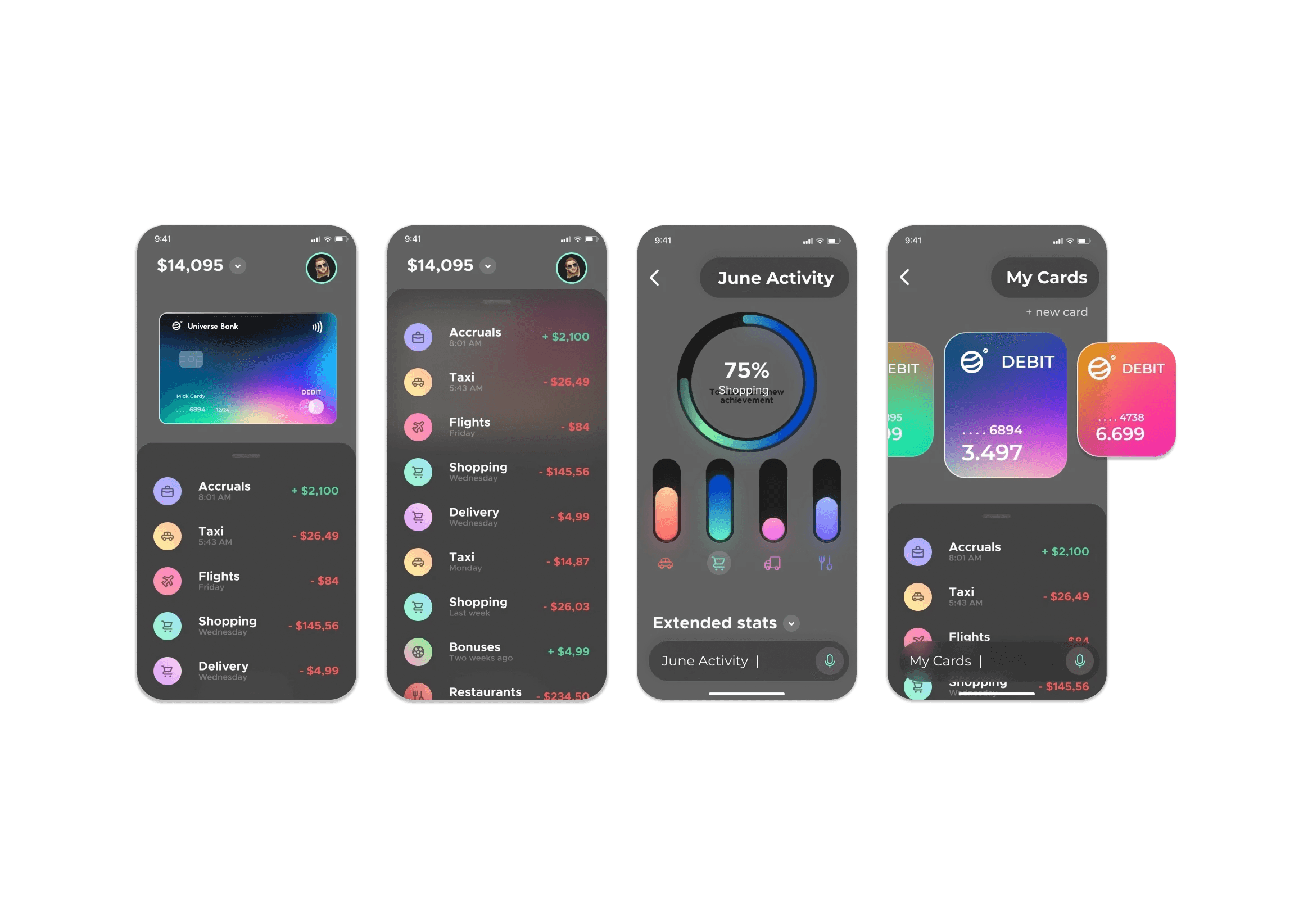
Designed intuitive, trustworthy UX/UI for AI-driven financial insights across mobile app.
Built scalable AI UI components and design system patterns.
Collaborated cross-functionally to deliver compliant, developer-ready solutions.
Problem:
Security:
Data Protection: Ensuring sensitive customer and transaction data is encrypted and protected against breaches.
Authentication: Implementing strong authentication mechanisms like multi-factor authentication (MFA) to prevent unauthorized access.
Fraud Detection: Developing robust fraud detection and prevention measures to identify and mitigate suspicious activities.
Regulatory Compliance:
KYC and AML: Adhering to Know Your Customer (KYC) and Anti-Money Laundering (AML) regulations, which involve extensive verification and reporting requirements.
Data Privacy Laws: Complying with data privacy laws such as GDPR, CCPA, or local regulations that dictate how customer data can be collected, stored, and used.
Audit and Reporting: Maintaining accurate records and logs for audit purposes and ensuring transparency in transactions.
Integration:
Legacy Systems: Integrating the app with existing banking systems, which may be outdated or not designed for easy integration.
APIs and Third-party Services: Ensuring seamless interaction with APIs and third-party services for functionalities like payments, credit scoring, etc.
User Experience:
Usability: Designing an intuitive and user-friendly interface that banking agents can easily navigate.
Accessibility: Ensuring the app is accessible to all users, including those with disabilities.
Performance: Developing an app that performs well even on low-end devices and in areas with poor connectivity.
User Adoption:
Building Trust: Gaining the trust of banking agents and customers to ensure widespread adoption of the app.
Feedback Mechanism: Implementing a feedback mechanism to continuously improve the app based on user input.
Solution :
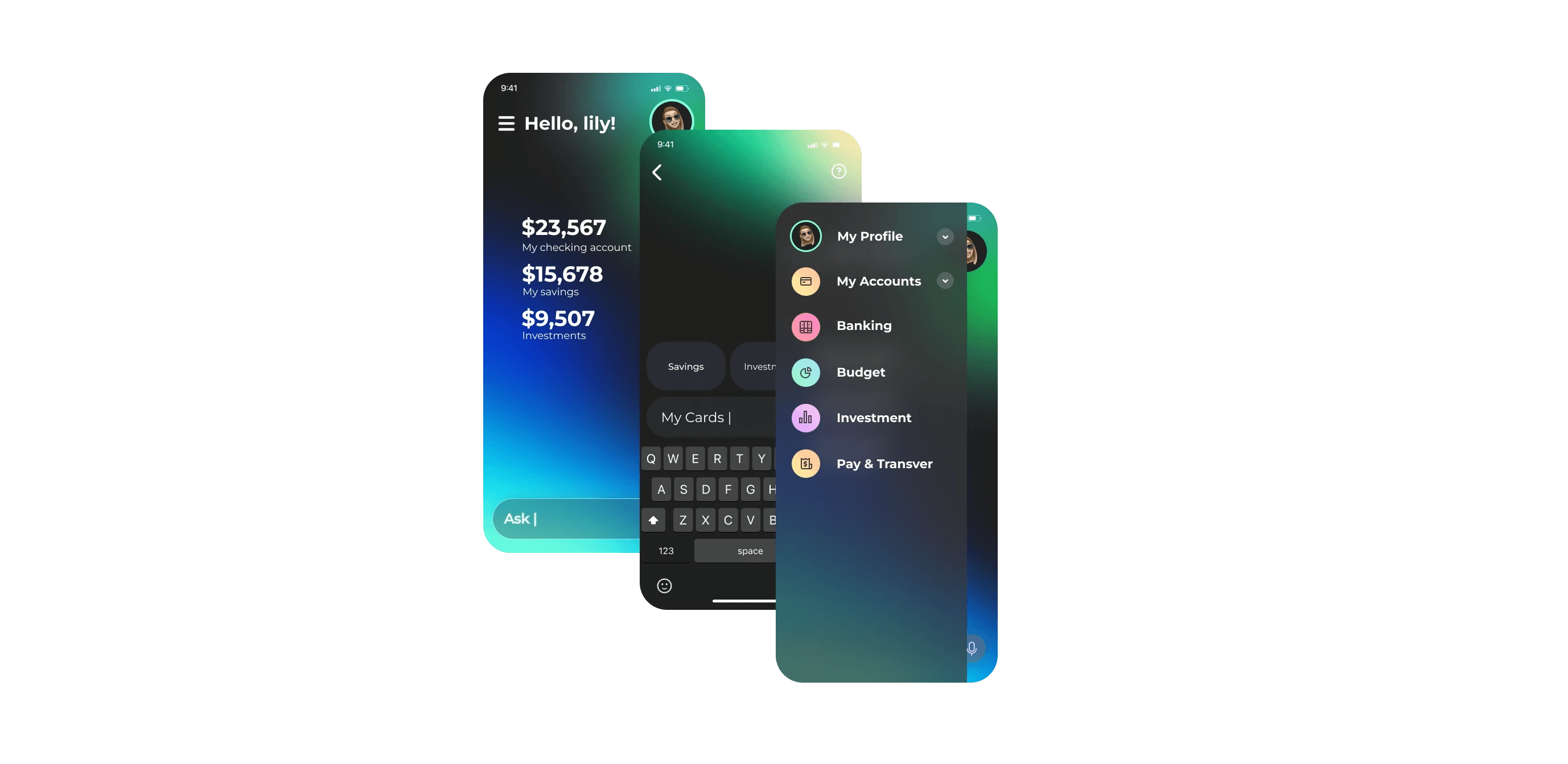
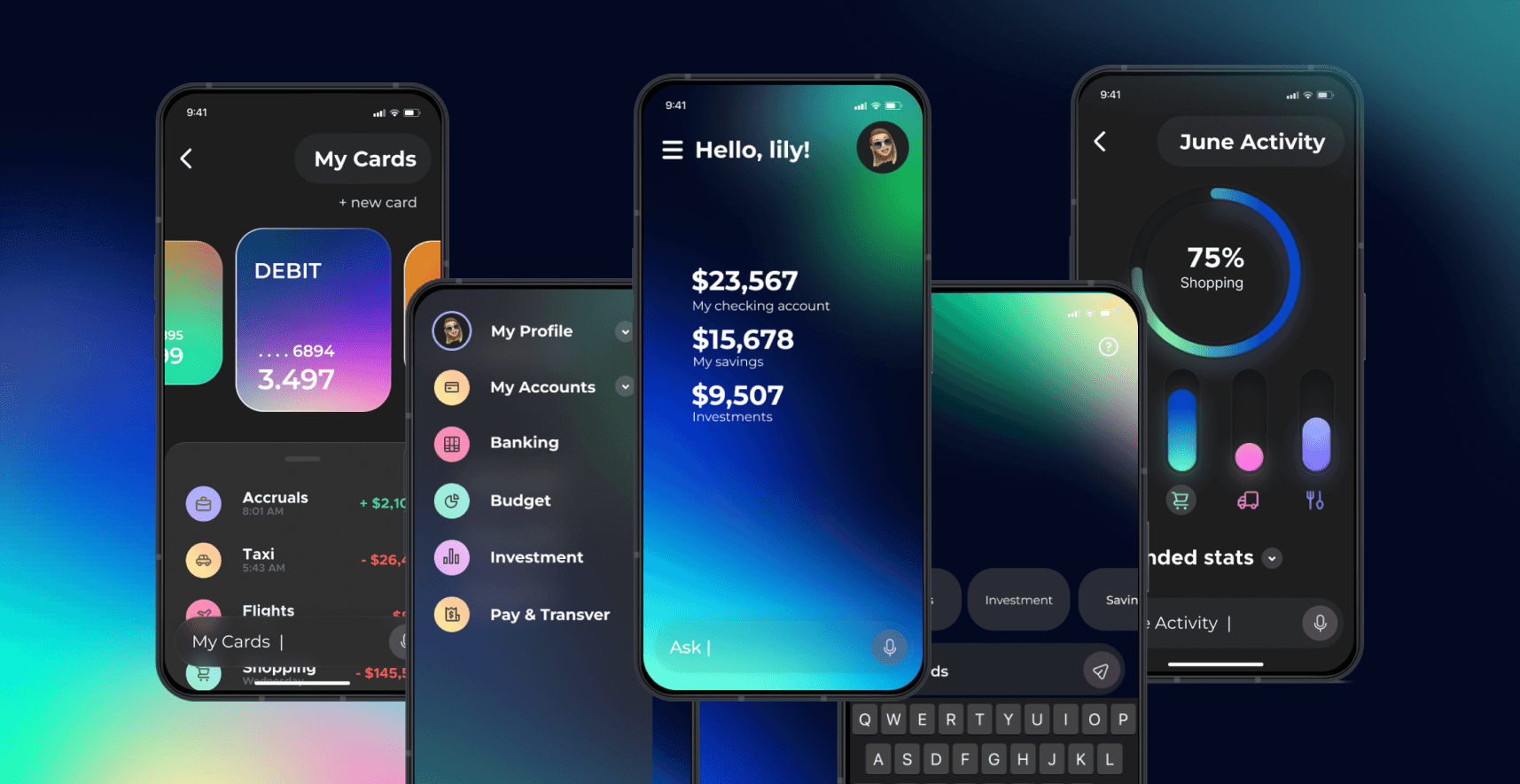
Designed a conversational interface for the AI agent, using natural language processing (NLP) to understand customer queries.
Created a personalized dashboard for customers to view account information, transaction history, and tailored product recommendations.
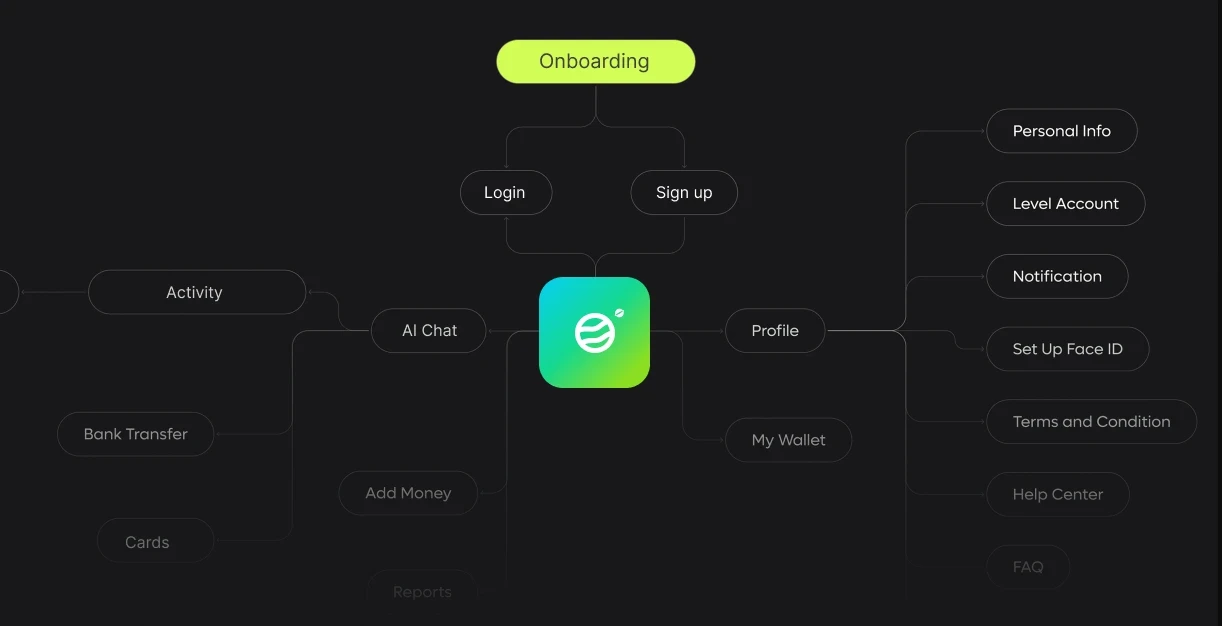
Developed a intuitive navigation system, using clear and concise language and visuals.
Challenge :
Picking up the pieces
At the beginning of the project, we didn't have a clear mission or specific goals for the AI banking assistant. Without pre-existing insights, I conducted research to understand what people need from an AI-powered mobile banking app for budgeting.
Common use cases for integrating an AI agent into a mobile banking app for budgeting
Budget Creation and Management
Initial Setup: Assist users in creating a budget by asking about income, expenses, and financial goals.
Adjustments: Help users adjust their budgets as their financial situations change.
Expense Categorization
Automatic Categorization: Automatically categorize transactions into predefined expense categories.
Custom Categories: Allow users to create and manage custom expense categories.
Spending Insights and Analysis
Monthly Reports: Provide detailed monthly reports highlighting spending patterns and trends.
Spending Alerts: Notify users when they are approaching or exceeding their budget limits.
Goal Tracking
Savings Goals: Help users set and track savings goals, offering encouragement and progress updates.
Debt Payoff Goals: Assist in setting up and tracking goals for paying off debts.
Expense Tracking
Real-Time Tracking: Enable users to track expenses in real-time, ensuring they stay within their budget.
Manual Entry: Allow users to manually enter expenses not captured automatically.
Investments Tracking
Real-Time Tracking: Enable users to track Investments in real-time.
These use cases illustrate how an AI agent can enhance a mobile banking app's budgeting features, providing users with personalized, insightful, and proactive financial management tools.
Key Takeaways:
User-centered design approach led to a more intuitive and personalized experience.
Collaboration with development team ensured successful design implementation.
Continuous testing and refinement improved the overall design quality.
This case study showcases my ability to conduct user research, develop user-centered designs, and collaborate with teams to deliver a successful project.The Banking AI Agent project demonstrates my expertise in UX design and my passion for creating innovative, customer-focused solutions.
More Projects


UI / UX Design
Banking AI Agent
AI Banking Assistant is a virtual assistant powered by artificial intelligence technology that provides customers with personalized and efficient banking services. AI Banking Assistant can perform a wide range of tasks, such as account balance inquiries, fund transfers, bill payments, and more.
Year :
2025
Industry :
FinTech
Client :
LunaAI
Project Duration :
6 months
My Contributions:
Defined AI assistant use cases and conversational flows for everyday banking tasks
Designed intuitive, trustworthy UX/UI for AI-driven financial insights across mobile app.
Built scalable AI UI components and design system patterns.
Collaborated cross-functionally to deliver compliant, developer-ready solutions.
Problem:
Security:
Data Protection: Ensuring sensitive customer and transaction data is encrypted and protected against breaches.
Authentication: Implementing strong authentication mechanisms like multi-factor authentication (MFA) to prevent unauthorized access.
Fraud Detection: Developing robust fraud detection and prevention measures to identify and mitigate suspicious activities.
Regulatory Compliance:
KYC and AML: Adhering to Know Your Customer (KYC) and Anti-Money Laundering (AML) regulations, which involve extensive verification and reporting requirements.
Data Privacy Laws: Complying with data privacy laws such as GDPR, CCPA, or local regulations that dictate how customer data can be collected, stored, and used.
Audit and Reporting: Maintaining accurate records and logs for audit purposes and ensuring transparency in transactions.
Integration:
Legacy Systems: Integrating the app with existing banking systems, which may be outdated or not designed for easy integration.
APIs and Third-party Services: Ensuring seamless interaction with APIs and third-party services for functionalities like payments, credit scoring, etc.
User Experience:
Usability: Designing an intuitive and user-friendly interface that banking agents can easily navigate.
Accessibility: Ensuring the app is accessible to all users, including those with disabilities.
Performance: Developing an app that performs well even on low-end devices and in areas with poor connectivity.
User Adoption:
Building Trust: Gaining the trust of banking agents and customers to ensure widespread adoption of the app.
Feedback Mechanism: Implementing a feedback mechanism to continuously improve the app based on user input.
Solution :
Designed a conversational interface for the AI agent, using natural language processing (NLP) to understand customer queries.
Created a personalized dashboard for customers to view account information, transaction history, and tailored product recommendations.
Developed a intuitive navigation system, using clear and concise language and visuals.
Challenge :
Picking up the pieces
At the beginning of the project, we didn't have a clear mission or specific goals for the AI banking assistant. Without pre-existing insights, I conducted research to understand what people need from an AI-powered mobile banking app for budgeting.
Common use cases for integrating an AI agent into a mobile banking app for budgeting
Budget Creation and Management
Initial Setup: Assist users in creating a budget by asking about income, expenses, and financial goals.
Adjustments: Help users adjust their budgets as their financial situations change.
Expense Categorization
Automatic Categorization: Automatically categorize transactions into predefined expense categories.
Custom Categories: Allow users to create and manage custom expense categories.
Spending Insights and Analysis
Monthly Reports: Provide detailed monthly reports highlighting spending patterns and trends.
Spending Alerts: Notify users when they are approaching or exceeding their budget limits.
Goal Tracking
Savings Goals: Help users set and track savings goals, offering encouragement and progress updates.
Debt Payoff Goals: Assist in setting up and tracking goals for paying off debts.
Expense Tracking
Real-Time Tracking: Enable users to track expenses in real-time, ensuring they stay within their budget.
Manual Entry: Allow users to manually enter expenses not captured automatically.
Investments Tracking
Real-Time Tracking: Enable users to track Investments in real-time.
These use cases illustrate how an AI agent can enhance a mobile banking app's budgeting features, providing users with personalized, insightful, and proactive financial management tools.
Key Takeaways:
User-centered design approach led to a more intuitive and personalized experience.
Collaboration with development team ensured successful design implementation.
Continuous testing and refinement improved the overall design quality.
This case study showcases my ability to conduct user research, develop user-centered designs, and collaborate with teams to deliver a successful project.The Banking AI Agent project demonstrates my expertise in UX design and my passion for creating innovative, customer-focused solutions.